ENGINEERING PRECISION.
Every subsystem is designed, tested, and manufactured in-house. Vertical integration gives us direct control over quality, schedule, and reliability across propulsion, avionics, structure, and software.
Core Systems
Propulsion
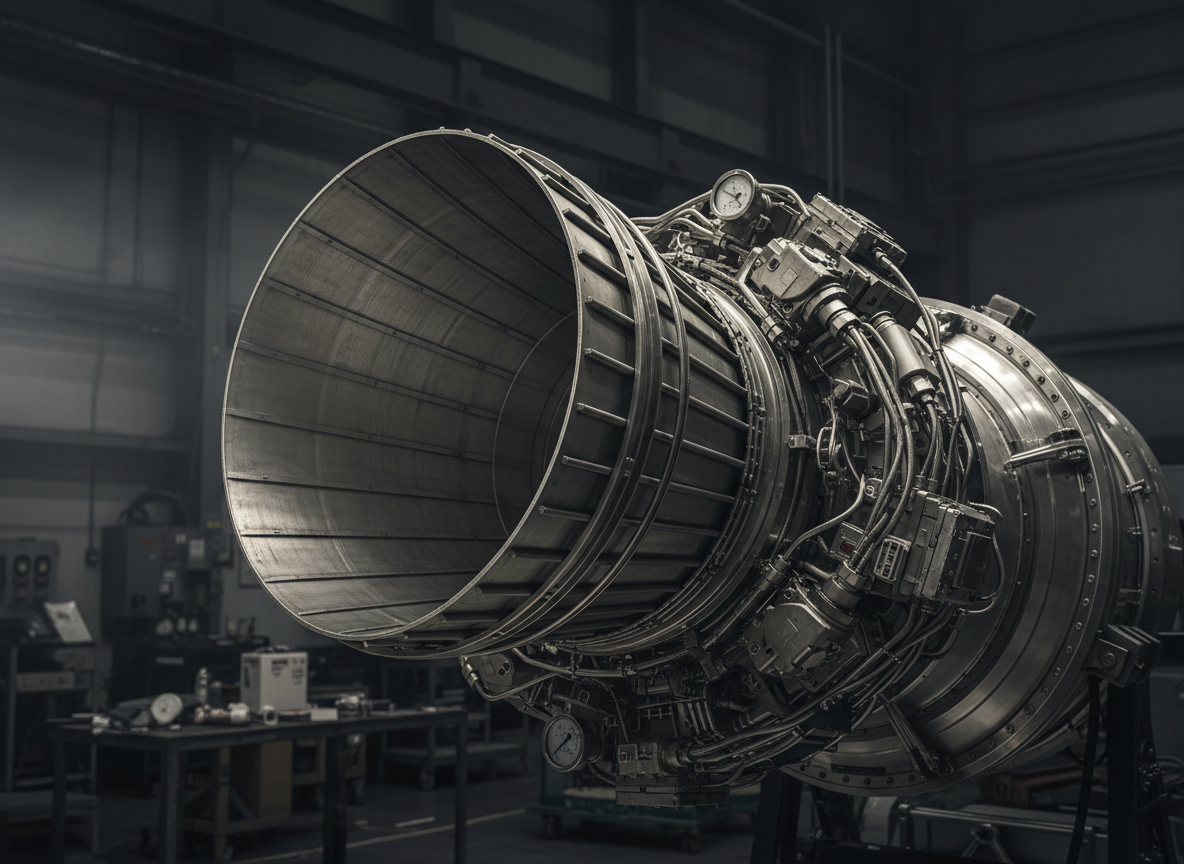
Our bi-propellant main engine and monopropellant attitude control system are designed and manufactured in-house. The main engine produces 220 kN vacuum thrust at a specific impulse of 340 seconds using LOX/RP-1 with a staged combustion cycle for maximum efficiency.
Avionics & Guidance
Triple-redundant flight computers run our proprietary GNC software stack, fusing IMU data with GPS and star-tracker inputs for sub-meter navigation accuracy throughout all mission phases. All avionics are radiation-hardened and qualified to MIL-STD-810.
Structural Systems
The primary structure is a carbon fibre composite monocoque with aluminium alloy interface rings. FEA and acoustic testing campaigns verify structural margins across the full launch load spectrum. The fairing is jettisoned at 120 km altitude using a pyrotechnic separation system.
Software & Mission Control
Ground software spans mission planning, launch sequencing, real-time telemetry processing, and post-mission data archiving. Our mission control infrastructure operates from two geographically separated facilities with hot failover. All command uplinks use AES-256 encryption with hardware security modules.
Work with our engineering team
Technical briefings and facility visits available for qualified mission partners.